
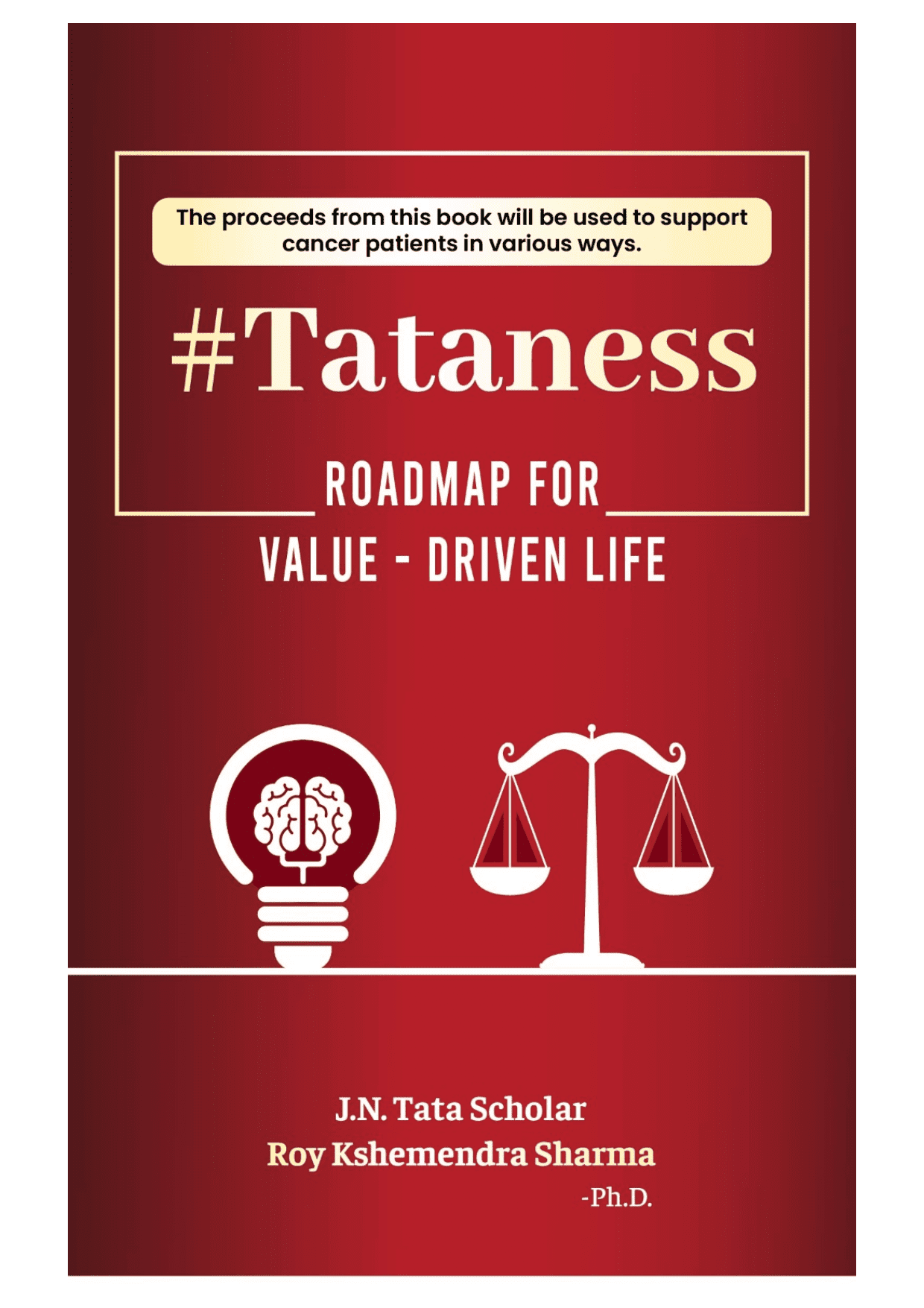
Tataness: Roadmap for Value-Driven Life by Roy Kshemendra Sharma is a profound exploration of the principles and values that define the Tata Group’s legacy, encapsulated in the term Tataness. The book delves into the ethical, moral, and humanitarian foundations that have guided the Tata Group for over 150 years, offering readers a blueprint for living a purposeful and value-driven life.
Key Themes and Highlights:
The Origin of Tataness:
The book begins with the humble beginnings of Jamsetji Tata in Navsari, Gujarat, highlighting how his values of humility, integrity, and service to society became the bedrock of the Tata legacy. The preservation of his ancestral home as a museum symbolizes the importance of staying rooted in one’s origins while striving for excellence.
Courage and National Responsibility:
The narrative recounts Tata’s response to the 26/11 Mumbai attacks, leading to the creation of DATA (Della Adventure Training Academy), a facility that trains individuals in civil defense. This chapter underscores the values of courage, resilience, and national service.
Selfless Service and Compassion:
Stories like that of Geeta Gopalkrishnan, who works tirelessly to support cancer patients, exemplify the Tata spirit of selfless service. Her efforts to mobilize resources for Tata Memorial Hospital reflect the power of compassion and humility.
Empathetic Leadership:
The life of Russi Mody, a Tata Steel chairman known for his wit and people-centric leadership, illustrates the importance of empathy, fairness, and fostering happiness in the workplace. His concept of “Gross Company Happiness” remains a timeless lesson in leadership.
Humility and Compassionate Leadership:
Ratan Tata’s legacy is celebrated through anecdotes of his humility, kindness, and unwavering commitment to ethical leadership. His ability to connect with people at all levels, from employees to street dogs, embodies the essence of Tataness.
Hands-On Leadership and Innovation:
The book details how Tata leaders, from Jamsetji to Ratan Tata, immersed themselves in their projects—whether building the Taj Mahal Hotel, launching Tata Motors, or creating the Tata Nano. Their hands-on approach and commitment to excellence demonstrate the power of visionary leadership.
Nation-Building Through Education:
Initiatives like the Tata Building India School Essay Competition and TCS iON’s IntelliGem platform highlight the Group’s focus on empowering youth through education and skill development, fostering a brighter future for India.
Community and Culinary Heritage:
The Tata Group’s culture of inclusivity and hospitality is showcased through its culinary traditions, from Bombay House’s meals to the Ratan Tata Institute’s iconic dishes. Food serves as a metaphor for unity and shared values.
The book concludes by emphasizing that Tataness is not confined to the Tata Group but is a universal philosophy of integrity, service, and purpose-driven living. It inspires readers to embrace these values in their own lives, contributing to a better world through ethical leadership and compassion.
Ethics at the Core is more than a tribute to the Tata legacy; it is a call to action for individuals and organizations to prioritize values over profit, service over self-interest, and humanity over hierarchy. Through captivating stories and timeless lessons, Dr. Roy offers a roadmap for a life of fulfillment, impact, and enduring significance.